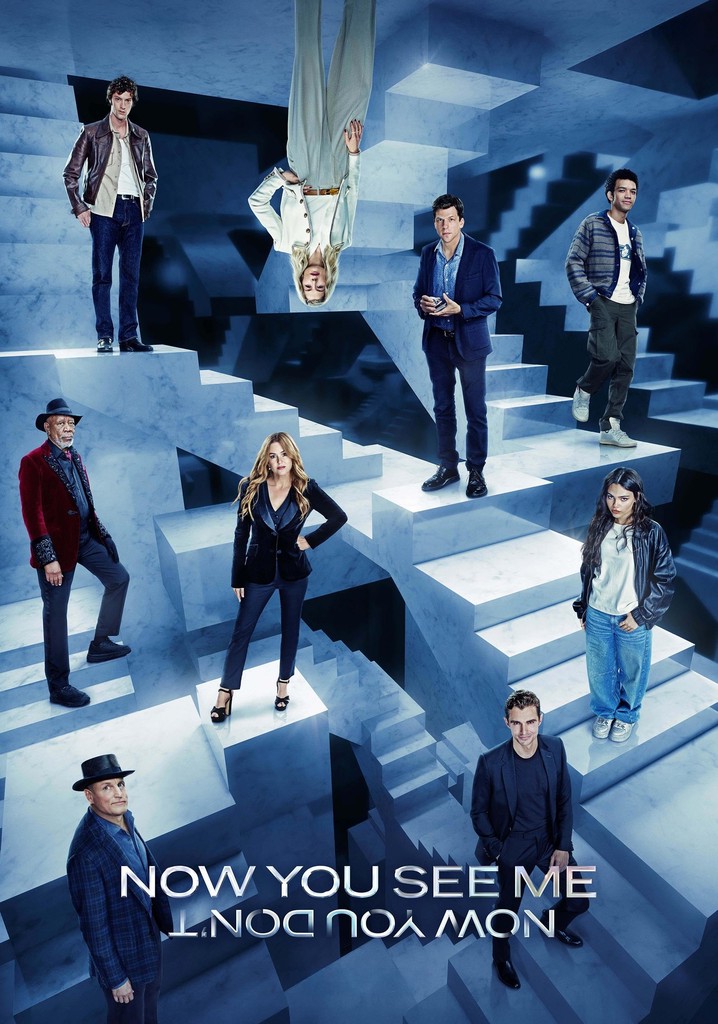


A Franchise That Knows Its Tricks
After a nine-year break, Now You See Me: Now You Don’t steps back into the spotlight with no interest in grounding itself in logic. Instead, it doubles down on the franchise’s defining strengths—impossible magic, rapid twists, and globe-hopping heists. The film is fully aware of its “don’t think too hard” appeal, and that self-awareness keeps the experience light, energetic, and entertaining.
Story & Pacing
The plot moves at a relentless speed, rarely giving the audience time to question how anything works. Magic isn’t just a theme here—it’s the narrative engine. Illusions drive the story forward, allowing the film to maintain its brisk rhythm while also planting seeds for a potential fourth installment. The screenplay may not be intricate, but it’s efficient and purpose-built for momentum.
Performances & Character Dynamics
The original Horsemen remain the heart of the movie. Their shared history translates into natural banter and believable teamwork, which continues to be one of the franchise’s most enjoyable elements.
The new additions—Ariana Greenblatt, Justice Smith, and Dominic Sessa—bring fresh energy. Their characters share a convincing familial connection that blends smoothly with the established cast, adding emotional texture without overshadowing the veterans.
Rosamund Pike, however, feels underutilized. Her antagonist lacks dimension, and the consistently thick accent draws more attention than her motivations. In a series built on layered deception, the villain’s simplicity feels like a missed opportunity.
Direction & Visual Style
Director Ruben Fleischer injects the film with color and movement, steering clear of the dull, washed-out look of the previous installment. The movie feels alive, constantly in motion, and visually playful.
The second act stands out as the film’s creative peak. Set pieces involving a rotating environment and warped spatial design are staged with precision, making the illusions feel immersive rather than merely flashy.
Cinematographer George Richmond elevates these sequences with sweeping camera movements and a standout extended shot that adds both tension and spectacle. The visual language reinforces the magic, making the camera itself part of the illusion.
Final Take
Now You See Me: Now You Don’t isn’t interested in realism—and that’s exactly why it works. It’s loud, clever, and gleefully over-the-top, delivering a fun cinematic experience that understands its audience. While it stumbles with a weak villain, the film’s energy, ensemble chemistry, and inventive visuals ensure it earns its place in the franchise—and makes a strong case for what comes next.

 Cinema Trace - Short Movie Reviews
Leave a comment