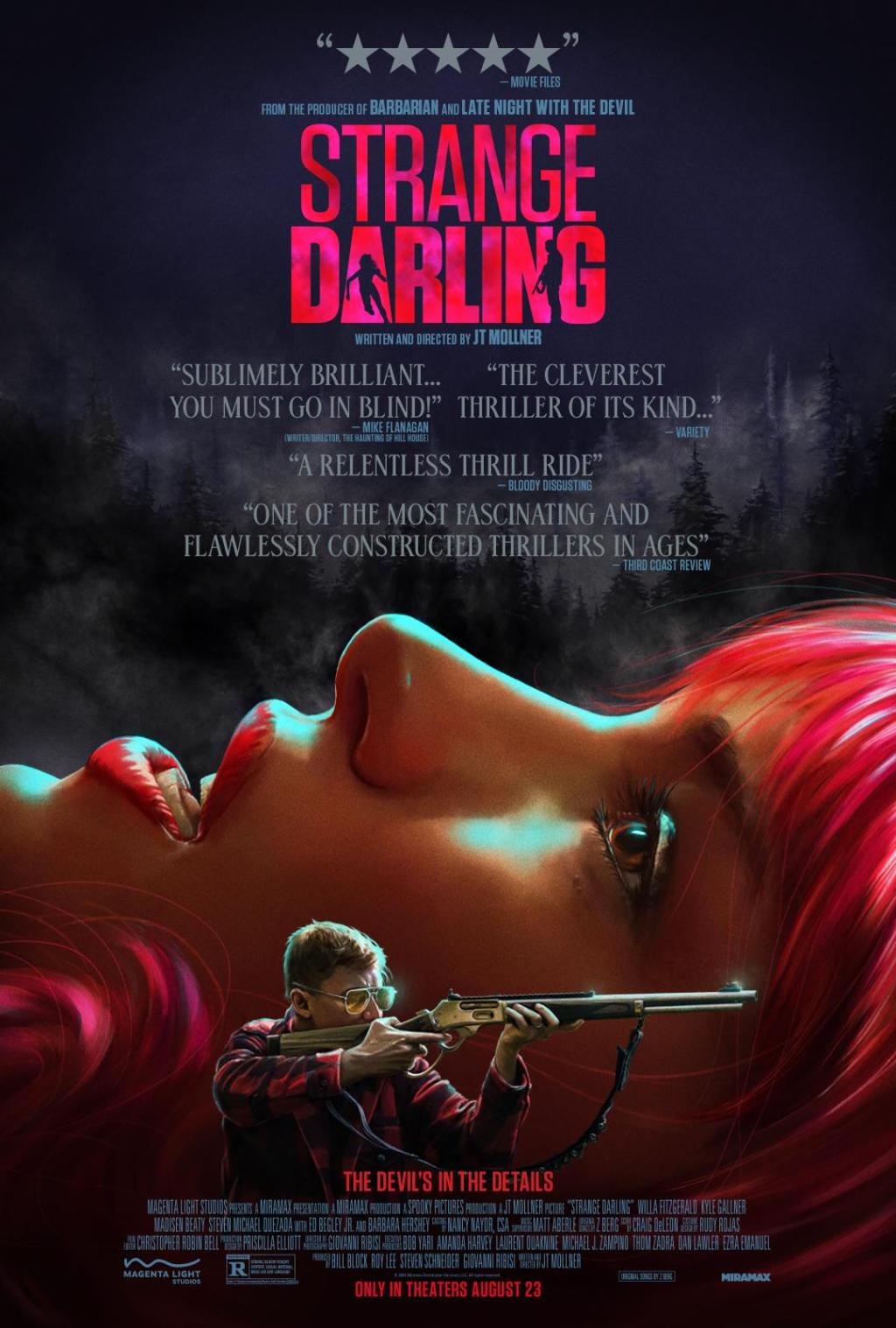


“Strange Darling” (2023) is a tightly crafted, low-budget thriller that excels in its ability to keep audiences on edge from start to finish. The film’s minimalistic approach, paired with strategic storytelling and direction, makes it a standout despite its limited resources. Directed by JT Mollner, “Strange Darling” unfolds through six distinctive chapters, each of which adds to the tension and mystery as the story progresses. Though the chapter structure might initially feel jarring, it quickly becomes clear that it serves a larger purpose, helping to unravel the narrative in a deliberate and intriguing way.
The film is centered around a captivating performance by Willa Fitzgerald, who plays the female lead, delivering a masterful portrayal of a character navigating a perilous situation. Her nuanced performance is crucial to the film’s success, drawing viewers deeper into the story with each twist and turn. Fitzgerald’s performance is both intense and mesmerizing, contributing to the quasi-erotic thriller vibe that underpins the movie. Her on-screen presence captivates and holds the audience, particularly in moments of tension and emotional volatility.
The plot revolves around a cat-and-mouse chase between a man and a woman, but what sets “Strange Darling” apart is how it subverts traditional genre expectations. The dynamic between the two leads is more complex than it first appears, blurring the lines between victim and villain, and playing with the audience’s perception of who holds the power. This ambiguity keeps viewers guessing throughout the film, wondering what the next chapter will reveal about the true nature of the characters.
While there are moments of extreme drama and tension, “Strange Darling” also finds time for introspection and subtle character development. These quieter moments allow the audience to become emotionally invested in the characters before the next wave of suspense hits. The pacing of the movie is deliberate, never rushing through key scenes, which heightens the overall tension and sense of dread.
Despite its low budget, the film uses its resources effectively, crafting a haunting atmosphere through clever cinematography and a minimalist score. The film’s settings are stark, almost barren at times, adding to the feeling of isolation and impending danger. The lack of a more robust budget is never felt in a negative way; instead, it pushes the filmmakers to be more creative, focusing on character interactions, sharp dialogue, and psychological tension rather than relying on expensive set pieces or special effects.
The film’s strategic use of violence is another aspect worth noting. “Strange Darling” doesn’t revel in gore for its own sake but rather uses it as a tool to shock and unsettle the audience at crucial moments. These scenes are visceral and impactful, leaving a lasting impression without overwhelming the narrative.
One of the movie’s strongest aspects is how it plays with audience expectations. It uses familiar thriller tropes but turns them on their head, often leading viewers down one path only to surprise them with an unexpected twist. This unpredictability is key to why the film remains engaging throughout, and it’s also why it’s best experienced without any spoilers. As noted, this is the kind of film that thrives on surprise, and it’s likely that future reviews and discussions will inadvertently give away some of its most shocking moments.
In conclusion, “Strange Darling” is a testament to what can be achieved with limited resources and a strong creative vision. JT Mollner has delivered a sharp, memorable thriller that lingers long after the credits roll. Willa Fitzgerald’s standout performance, combined with the film’s well-engineered tension and dramatic plot points, makes it a must-see for fans of the genre. While it may not have the backing of a conventional budget, “Strange Darling” proves that a well-executed concept can be just as thrilling and impactful as any big-budget production.



Leave a comment