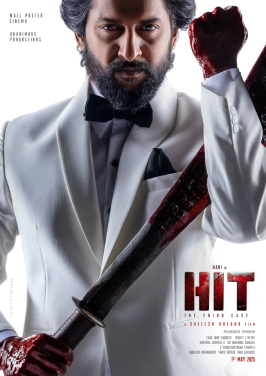


HIT: The Third Case continues the journey of the Homicide Intervention Team, returning with high expectations following the gripping narratives of the first two cases. However, this third installment takes a slightly different turn. While it maintains the franchise’s gritty tone, it leans more toward an action-packed thriller than a complex psychological mystery.
Plot and Screenplay: Unlike its predecessors that thrived on intricate storytelling and surprising plot twists, this entry follows a more straightforward crime narrative. The central mystery lacks the depth and shock value fans might expect, making it feel more like a conventional action drama than a layered whodunit. However, what the film lacks in narrative twists, it compensates for in technical brilliance and pacing. The screenplay is taut, keeping the audience engaged through relentless action and immersive visuals.
Performance and Casting: Nani leads the film with an intense and physically imposing performance. Known for his versatility, he sheds his boy-next-door charm to fully embrace the role of a hardened officer. His transformation—both emotional and physical—is remarkable. When his character’s muscular physique is revealed toward the climax, it solidifies the believability of his action sequences. His performance is raw and convincing, portraying both brutality and inner conflict with equal command.
The supporting cast is efficient, though the film doesn’t dwell much on character development outside of Nani’s lead role. The cameos sprinkled toward the end act as a delightful payoff for fans, hinting at the larger HIT universe and giving a strong adrenaline boost just when needed.
Action and Technical Aspects: One of the film’s strongest suits is its action design. The choreography stands out for its realism—guns are handled with professional accuracy, and characters don’t fall into exaggerated cinematic habits like constant trigger-pulling. There’s a deliberate attention to tactical detail that adds authenticity to combat scenes.
Yet, the film doesn’t shy away from cinematic liberties. In one memorable scene, a character’s thigh is chopped off in a single swing—an exaggerated moment that might strain believability but still adds to the visceral impact the movie is aiming for. This blend of realism and stylized violence creates a gripping visual experience for action lovers.
A standout sequence is a long, uninterrupted take during an intense fight scene, clearly inspired by films like Extraction. It’s executed with precision, heightening the immersion and showcasing the director’s ambition in staging high-octane set pieces.
Visuals and Sound: Technically, HIT: The Third Case is impressive. Cinematography is sleek, capturing the gritty atmosphere of the crime world with sharp, moody frames. The background score complements the tone perfectly, building tension without overshadowing the narrative.
Final Verdict: HIT: The Third Case may not live up to the storytelling complexity of the first two installments, but it carves its own space as a brutal, action-forward thriller. For audiences who thrive on suspenseful investigations, the film might feel like a step down. However, for action enthusiasts and fans of Nani’s performance, it offers a thrilling ride filled with blood, sweat, and bullets.
Rating: 3.5/5




Leave a comment