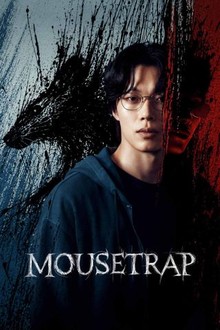


Mousetrap – When Someone Else Steals Your Life
There are plenty of Korean thrillers built around murder, revenge and serial killers. Mousetrap takes a different route. Its most interesting weapon isn’t violence—it is the fear of losing your identity.
The series starts with an idea that sounds almost impossible: what if another person could take over your life so convincingly that the people who know you best began believing that person instead of you?
That question becomes the foundation of Mousetrap, a psychological thriller that slowly turns from a mystery into a much more unsettling story about identity, trust and manipulation.
At first, the series may appear to be a straightforward crime mystery. But as the episodes progress, the story keeps changing shape. Information that initially looks insignificant becomes important later, and characters who appear trustworthy begin to look suspicious.
That uncertainty is probably the show’s biggest strength.
A story that makes you doubt everyone
The protagonist, Mun-jae, finds himself trapped in a situation where his own identity is no longer completely under his control. Someone has effectively entered his world and begun living a life that should belong to him.
The frightening part isn’t simply that someone has stolen his identity.
It is that nobody seems willing to believe him.
That gives the story a psychological dimension. Mun-jae isn’t just fighting an opponent; he is fighting people’s perception of reality.
The series repeatedly plays with the question of who deserves our trust. Even when we think we understand what happened, another piece of information changes the picture.
This makes Mousetrap a show that rewards viewers who pay attention to small details.
Ryu Jun-yeol is the heart of the series
Ryu Jun-yeol gives the show much of its emotional weight.
His performance works because he doesn’t try to make every scene dramatic. Instead, he uses subtle expressions and changes in behaviour to communicate confusion, fear and suspicion.
There are moments when his character barely says anything, yet you can sense that something is happening underneath the surface.
That restraint suits the story.
The character is supposed to be uncertain about his own circumstances, and the performance allows the audience to experience some of that uncertainty with him.
It is also interesting to watch the contrast between vulnerability and determination in his performance. Mun-jae isn’t portrayed as an invincible thriller hero. He is a person who has suddenly found himself in an extraordinary situation and has to figure out how to survive it.
Sul Kyung-gu adds another layer
Sul Kyung-gu brings a completely different personality to the series.
His character, No-ja, isn’t someone you can easily classify as either good or bad. He has his own motives and isn’t particularly interested in following conventional rules.
That moral ambiguity makes him an entertaining presence.
The relationship between Mun-jae and No-ja is also one of the more interesting aspects of the show. Their partnership doesn’t feel like the usual television friendship where two characters immediately trust each other.
Instead, there is always suspicion between them.
They may need each other, but that doesn’t mean they completely believe each other.
That tension makes their scenes considerably more interesting.
The folklore behind the story
One of the more unusual elements of Mousetrap is its connection to Korean folklore.
The idea comes from a traditional story involving a field mouse that takes on the appearance of a human after consuming that person’s discarded fingernail clippings.
The folklore may sound simple, but it fits surprisingly well with the central theme of the series.
The real horror isn’t someone looking like you.
It is the possibility that someone could become you in the eyes of everybody else.
That gives the series a stronger foundation than a conventional identity-theft story.
Where the series succeeds
The atmosphere is one of the show’s biggest strengths.
Mousetrap doesn’t need to fill every episode with explosions, chase sequences or graphic violence. Instead, it creates tension through uncertainty.
A conversation can feel suspicious.
A familiar location can suddenly seem threatening.
A character’s innocent-looking action can acquire a completely different meaning later.
That slow-building tension works particularly well during the first half of the series.
The show also understands the importance of leaving certain questions unanswered for a while. Instead of immediately explaining everything, it allows the audience to form their own theories.
And that naturally creates the urge to watch the next episode.
But it isn’t perfect
The same storytelling style that makes Mousetrap interesting can also become frustrating.
There are stretches where the series appears to be deliberately holding back information simply to maintain the mystery.
Some viewers will enjoy that approach. Others may feel that the story is taking too long to get to the point.
The supporting characters could also have received more development. The central mystery gets so much attention that some of the secondary characters occasionally feel like pieces of the plot rather than fully developed individuals.
The ending is another area where opinions are likely to differ.
Rather than giving viewers a completely straightforward conclusion, the series leaves room for interpretation. I don’t think that is necessarily a bad choice, but after investing so much time in the mystery, some viewers may want more definitive answers.
The biggest thing Mousetrap gets right
For me, the most interesting part of the series isn’t trying to figure out who the villain is.
It is the idea of identity itself.
We normally think our identity is something nobody can take away from us. We have our name, memories, photographs, relationships and documents.
But what happens if somebody manages to manipulate all of those things?
At what point would people stop believing you?
And if everyone around you accepts someone else as you, does your identity still belong to you?
Those questions make Mousetrap more interesting than an ordinary crime thriller.
Should you watch it?
If you enjoy Korean dramas that require some patience and like trying to figure out a mystery before the characters reveal the answers, Mousetrap is worth giving a chance.
It isn’t a series that should be watched simply for action or constant twists. Its appeal comes from the atmosphere, performances and gradual uncovering of the truth.
Ryu Jun-yeol is particularly good, while Sul Kyung-gu provides the unpredictability that keeps the story from becoming too serious or one-dimensional.
The show does have pacing issues, and not every revelation has the same impact. But the central idea is strong enough to carry the series.
Final thoughts
Mousetrap is an intriguing psychological thriller that uses identity as its biggest source of fear.
It doesn’t always get everything right, but it succeeds in creating the uncomfortable feeling that the truth may be completely different from what we’re seeing.
The best thrillers aren’t necessarily the ones with the most shocking twists. Sometimes they’re the ones that make you look back at everything you’ve already watched and wonder whether you understood it correctly.
That’s where Mousetrap works best.
It is a slow-burning, atmospheric mystery with strong performances and an unusual premise. It may not satisfy everyone, particularly viewers looking for a fast-paced thriller with neatly explained answers, but for those willing to settle into its style, there is plenty here to appreciate.




Leave a Reply